By Festus Damilare Ukolo | Fact Frontier.
Click here to read more about the reporter.
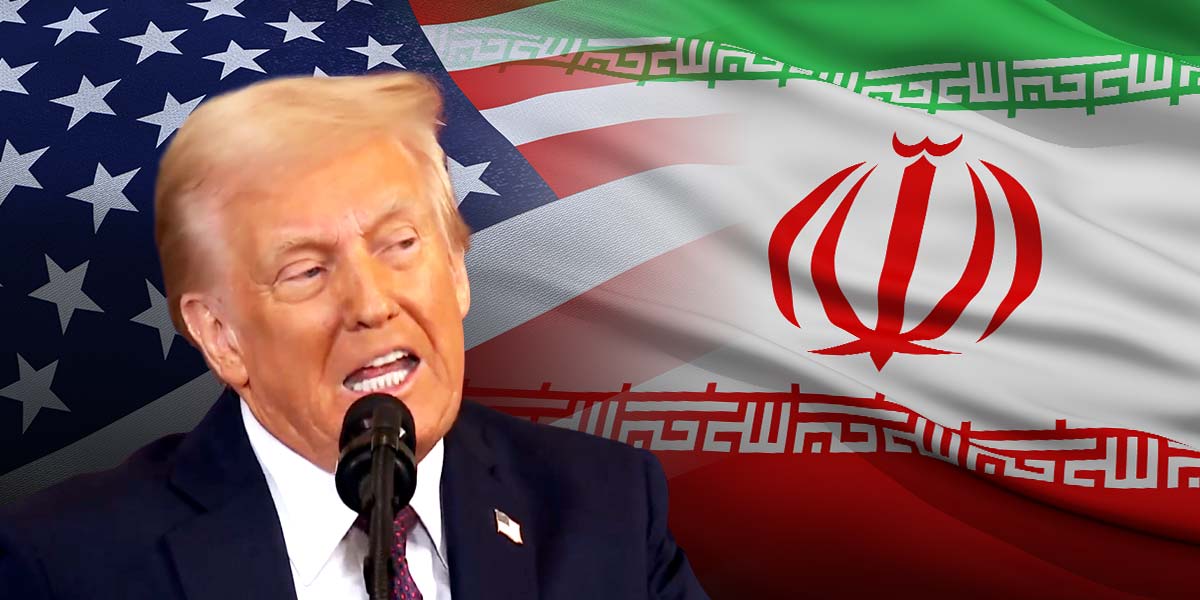
A stark divergence in official narratives has emerged in the wake of recent statements regarding maritime security in the Strait of Hormuz. While U.S. President Donald Trump has characterized American involvement as a facilitative measure to ease traffic congestion and foster regional prosperity, Iranian authorities have countered by reaffirming their exclusive authority over navigation through the strategic waterway.
The exchange follows the reported establishment of a temporary two-week cessation of hostilities between the two nations. Although the pause in military activity has tempered immediate fears of a broader regional escalation, the conflicting interpretations surrounding the operational status of the strait underscore the fragile and contingent nature of the current détente.
The American Position: Facilitation and Reconstruction
In a series of communications disseminated via his personal social media platform, President Trump presented a vision of American naval assets serving a benign supervisory function. The President described the initiative as a pivotal moment for global stability and economic recovery.

"A big day for World Peace! Iran wants it to happen, they've had enough! Likewise, so has everyone else!" President Trump stated. "The United States of America will be helping with the traffic buildup in the Strait of Hormuz."
The President's remarks eschewed prior confrontational language in favor of a tone emphasizing commercial opportunity and humanitarian logistics. He indicated that U.S. forces would maintain a presence in the vicinity, describing their posture as "just ‘hangin' around' in order to make sure that everything goes well." Furthermore, the President articulated an expectation of significant financial gain and post-conflict recovery, asserting that "Big money will be made. Iran can start the reconstruction process." He concluded by speculating that the region might be entering a period of unprecedented prosperity, dubbing it potentially "the Golden Age of the Middle East."
The Iranian Position: Conditional Access and National Sovereignty
The Islamic Republic of Iran has responded to the American announcement with a pointed and unequivocal assertion of its sovereign prerogatives. Far from acknowledging a need for external assistance, Tehran has framed the current arrangement as a demonstration of its operational control over the Strait of Hormuz.
Foreign Minister Abbas Araghchi clarified that the safe passage of vessels through the strait is contingent upon explicit coordination with the Armed Forces of the Islamic Republic of Iran. This stipulation effectively establishes a permission-based transit regime for the duration of the ceasefire. Such a framework places the onus on international shipping and naval vessels to seek clearance from Iranian military authorities, particularly the Islamic Revolutionary Guard Corps (IRGC) Navy.
This position is reinforced by domestic media portrayals within Iran, which have characterized the ceasefire and the associated maritime arrangements as a strategic capitulation by Washington. Concurrently, discussions have emerged regarding the potential imposition of transit fees—colloquially termed a "Tehran Tollbooth"—as a mechanism to generate revenue for national reconstruction efforts. Such a policy would represent a direct monetization of Iran's geographic leverage over the critical chokepoint.
Implications for Maritime Security and Diplomatic Stability
The chasm between the American narrative of "assistance" and the Iranian insistence on "coordination" creates a volatile operational environment. The Strait of Hormuz, which facilitates the transit of approximately one-fifth of global petroleum consumption, is not merely a geographic feature; it is a geopolitical pressure point where miscommunication carries profound consequences.
The United States Navy's historical mandate to ensure freedom of navigation now operates in tension with Iran's newly articulated requirement for prior authorization. This dual-authority structure introduces significant ambiguity for commercial shipping insurers and naval commanders alike. A scenario in which a U.S. vessel proceeds under the assumption of unimpeded passage, while an IRGC patrol boat demands compliance with a coordination protocol, presents a clear and present risk of inadvertent confrontation.
The two-week ceasefire, while a welcome respite from kinetic conflict, has not resolved the fundamental question of command and control over the waterway. The United States speaks of a stable, open strait; Iran speaks of a strait open solely at the discretion of the Islamic Republic.
A Precarious Equilibrium
As the global energy market observes this delicate balance, the durability of the ceasefire appears inextricably linked to the resolution of this jurisdictional dispute. The American president envisions a new era of regional cooperation, while Iranian leadership signals that the status quo has been altered irrevocably in their favor.
Given the diametrically opposed interpretations of the current maritime protocol—and the presence of heavily armed naval forces operating under conflicting rules of engagement—is the foundation of this temporary peace so inherently unstable that a single procedural dispute over the right of transit could precipitate the resumption of hostilities?